 419-227-8742
 twistedbars@aol.com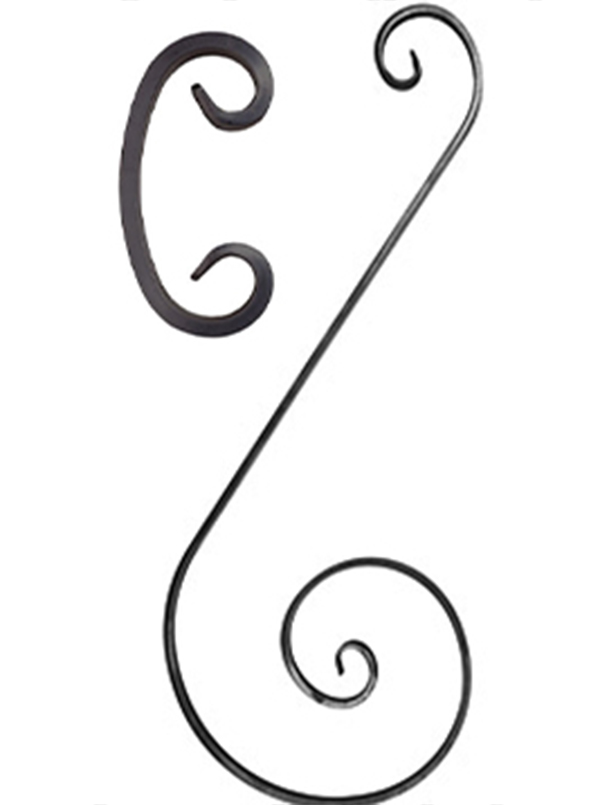
Scrolls
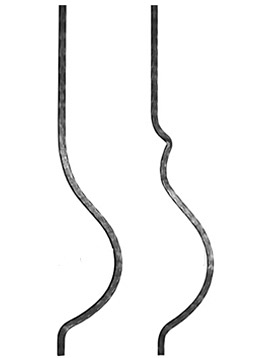
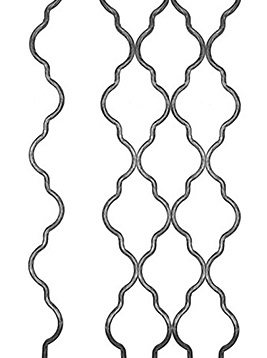
Scrolls are decorative metal components featuring curved, flowing shapes that add movement and classic details. They’re commonly used to create focal points within gates, railings, and decorative panels.
- Material options of Aluminum & Steel
- Square, Round, and Flat configurations up to 24″ diameter
- Used in decorative gates, and wrought iron fencing
- Custom bar sizes & lengths available
- Supplied raw, ready for paint or powder coating
- 100% Made in the USA
Need pricing or product guidance?
Request a quote and our team will help you find exactly what you’re looking for, including custom sizes and configurations.
Anchoring Architectural Designs with Curved Form and Ornamental Precision Using Scrolls
Architectural and decorative metal systems often rely on curved elements to introduce movement, balance, and visual rhythm. Manufactured from solid metal stock, Scrolls provide controlled curvature while maintaining consistent geometry for precise fabrication. Their flowing profiles soften rigid assemblies and add decorative detail without sacrificing alignment or repeatability.
In both traditional and contemporary metalwork, scrolls are commonly referred to as metal scrolls or iron scrollwork, reflecting their role as foundational ornamental components within architectural systems. Regardless of terminology, the form remains consistent—curved metal elements designed to integrate cleanly into fabricated assemblies.
Where Scrolls Are Commonly Used
Across architectural and ornamental applications, Scrolls are incorporated wherever curved detailing enhances the overall composition. Common uses include railings, gates, fences, grilles, panels, balconies, and decorative infill sections. In these systems, scrolls provide contrast against straight bars and formed components, guiding the eye through the design.
Because they function as architectural components, metal scrolls integrate seamlessly with linear elements, allowing decorative curvature to be introduced without disrupting spacing, attachment methods, or system proportions.
Structural Placement and Functional Demand
Although visually expressive, scrolls maintain predictable placement within fabricated metal assemblies. When used as repeating vertical or horizontal elements, these components preserve consistent spacing while introducing curvature that complements surrounding bars.
Within larger systems, iron scrollwork contributes decorative emphasis while maintaining the structural logic required for accurate alignment and installation. Scrolls enhance visual interest without compromising consistency or dimensional control.
Design Influence of Metal Scrolls and Iron Scrollwork
Visually, metal scrolls add movement and softness to architectural layouts dominated by straight lines. Their curved profiles create rhythm and flow, helping establish focal points and transitions within railings and panels.
As part of iron scrollwork, scrolls may be used subtly or prominently depending on placement and repetition. When applied intentionally, they enhance depth and character while remaining disciplined and cohesive within the overall system.
Types of Scrolls Offered: S Scrolls and C Scrolls
While the term “scrolls” describes the overall category, there are two primary scroll types commonly used within architectural metalwork: S Scrolls and C Scrolls. Each type offers a distinct visual effect while maintaining compatibility with standard fabrication and installation methods.
S Scrolls
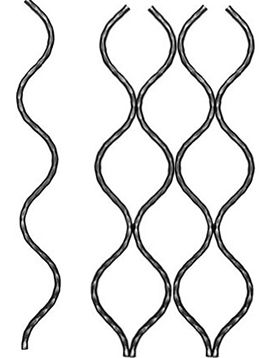
S Scrolls feature opposing curves that create a mirrored, flowing profile. This balanced form makes them well suited for use as central infill elements within railings, panels, and gates. When repeated across an assembly, S scrolls establish symmetry and visual rhythm, contributing to cohesive and ornamental layouts.
Because of their dual-curve design, S Scrolls are often selected when pattern repetition and visual continuity are important within iron scrollwork systems.
C Scrolls
C Scrolls consist of a single continuous curve, offering a more open and directional profile. These scrolls are frequently used at terminations, transitions, or as paired elements within larger compositions. When mirrored or combined, C scrolls can frame openings or create flowing movement across an assembly.
Within metal scrolls applications, C Scrolls provide flexibility in layout while maintaining consistent curvature and predictable attachment.
Material and Finish Considerations
Scrolls are produced from solid metal stock to ensure dimensional accuracy and consistent curvature. Whether referred to as scrolls, metal scrolls, or iron scrollwork, the underlying form remains consistent across materials.
Common material options include aluminum, steel, iron, bronze, and brass, allowing selection based on environment, durability requirements, and design intent. Surface finishes are applied later in the project workflow to coordinate visually with surrounding components.
Installation Context and System Compatibility
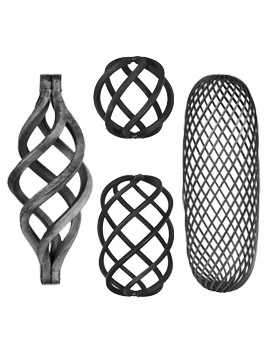
Successful installations are planned as integrated systems rather than isolated elements. Scrolls integrate cleanly with Balusters, square bars, Pickets, flat bars, Newel Posts, round bars, Spindles, collars and other shaped metal components. This compatibility allows curved decorative elements to be introduced without altering spacing, alignment, or installation efficiency.
When transitions are planned intentionally, iron scrollwork enhances visual flow while maintaining consistency throughout the installation.
Ordering and Project Quotes
Scrolls are specified based on project requirements rather than predefined configurations. Quotes account for size, quantity, material selection, and intended application to ensure fabrication details align with installation needs. In larger assemblies, S Scrolls or C Scrolls may be designated as repeating elements to maintain visual rhythm and continuity.
Most orders are produced efficiently, supporting fabrication timelines that align with active construction and installation schedules.
Who These Components Are For
Scrolls are well suited for homeowners, designers, and fabricators seeking curved decorative elements that add character without compromising precision. Commonly described as metal scrolls or iron scrollwork, these components support a wide range of architectural and ornamental applications while remaining consistent in form and function.
At Twisted Bars, Scrolls, including S Scrolls and C Scrolls, are developed as part of a broader family of Shaped Metal Bars, allowing curved profiles to be incorporated thoughtfully into cohesive railing and metalwork systems.