
 419-227-8742
 twistedbars@aol.com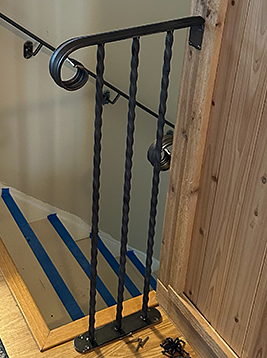
Stair pickets designed to provide structural support and refined definition to staircase railings.
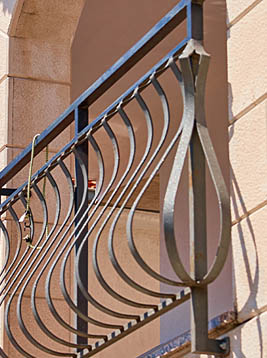
Metal deck pickets engineered for outdoor durability and strong railing performance.
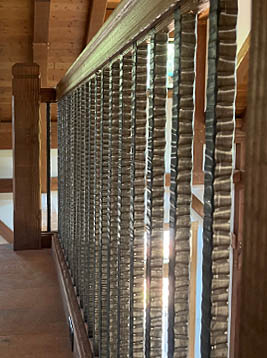
Railing pickets designed to reinforce structural integrity while enhancing architectural style.
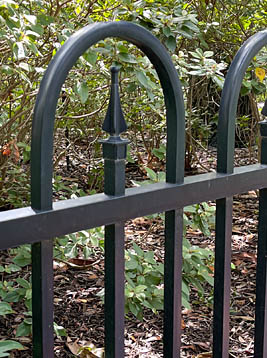
Fence pickets engineered for strength, security, and long-lasting exterior performance.
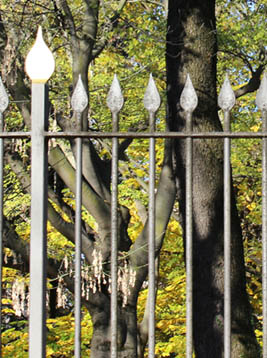
Gothic fence pickets featuring classic pointed styling for bold, traditional fencing.

Metal fence pickets engineered for durability, security, and long-term exterior performance.
Need pricing or product guidance?
Request a quote and our team will help you find exactly what you’re looking for, including custom sizes and configurations.
Pickets as the Defining Infill of Railing and Fence Systems
Pickets serve as the vertical infill components that complete railing and fencing systems, establishing spacing, alignment, and visual rhythm across a structure. Positioned between posts, rails, or mounting surfaces, these elements transform a skeletal framework into a finished architectural system by controlling proportion and repetition. While pickets are often associated with traditional wood construction, modern architectural applications rely on metal to achieve greater precision, durability, and long-term consistency.
Rather than functioning as isolated elements, Metal Pickets play an integral role in how a system reads visually and performs structurally. Their placement influences how continuous a railing or fence appears, how open or enclosed a space feels, and how effectively the system maintains alignment over time.
The Role of Pickets Across Architectural Systems
In practical terms, pickets regulate spacing and provide the visual and physical barrier required for safety and boundary definition. Their consistent vertical repetition guides the eyes eye along a system, reinforcing order while preventing the structure from feeling fragmented or improvised.
Although often discussed by application, the underlying function remains the same. Railing Pickets contribute to visual rhythm and spacing control along platforms, balconies, and guardrail systems. Stair Pickets support alignment and safety along stair runs and landings, while Fence Pickets define perimeter boundaries and property edges without relying on solid panels or excessive mass. Each application applies the same principles of proportion and repetition, adapted to its environment.
Design Influence Beyond Basic Function
While pickets are fundamentally functional components, they also play a significant role in shaping the visual language of a system. Their profiles, spacing, and surface conditions directly affect whether a railing or fence feels traditional, contemporary, refined, or utilitarian.
Straight profiles emphasize order and restraint, while variations such as twisted, hammered, or shaped forms introduce texture and depth through repetition. These surface treatments allow detail to emerge subtly, influencing character without disrupting alignment or overwhelming the overall design. This balance between structure and expression makes Pickets adaptable across a wide range of architectural styles.
Material Consistency and Fabrication Approach
Pickets are produced from solid metal stock to ensure dimensional stability and reliable performance across interior and exterior applications. Materials such as aluminum, steel, iron, bronze, and brass are commonly used, each offering distinct characteristics related to strength, weight, and appearance.
Rather than dictating a finished look, metal construction allows pickets to be refined as part of the broader project workflow. Finishes are typically applied after fabrication, enabling homeowners, fabricators, or installers to coordinate paint, powder coating, or specialty treatments with surrounding materials and environmental conditions. This approach preserves alignment and spacing while allowing the final appearance to reflect the overall design intent.
Types of Pickets by Application, Style, and Use Case
Because pickets are used across a wide range of architectural and exterior systems, they are available in multiple configurations defined by application, environment, and design intent. Each type serves a specific role within the overall system while sharing the same core principles of spacing, proportion, and alignment.
Stair Pickets
Stair pickets are designed for use along stair runs and landings, where consistent vertical infill supports both safety and visual flow. These components help guide movement through a space while maintaining alignment across changes in elevation.
Railing Pickets
Railing pickets are used within guardrail and balcony systems to establish spacing and visual rhythm along elevated edges. Their role is to reinforce continuity across long runs while preserving openness and architectural order.
Metal Deck Pickets
Metal deck pickets are intended for exterior deck applications, where durability and dimensional stability are essential. These pickets maintain alignment across open spans and exposed conditions while contributing to a cohesive outdoor railing system.
Fence Pickets
Fence pickets define boundaries and perimeter conditions across residential and commercial properties. Used to balance security, visibility, and visual consistency, these pickets establish rhythm and proportion along fence lines.
Gothic Fence Pickets
Gothic fence pickets introduce pointed profiles and historic influence into fencing systems. Their vertical emphasis and repeated form add architectural character while maintaining clear boundary definition.
Metal Fence Pickets
Metal fence pickets focus on material-driven performance, offering long-term stability and consistent alignment in exterior fencing applications. These pickets support a wide range of layouts while maintaining clean, controlled spacing.
System Compatibility and Component Integration
Pickets are designed to work in coordination with Newel Posts, rails, Balusters, mounting hardware, Spindles, and transition elements. Proper integration ensures spacing remains consistent, alignment is preserved, and the system functions as a cohesive whole rather than a collection of individual parts.
A system-based approach to picket selection simplifies coordination across multiple sections of a project and helps prevent visual or dimensional inconsistencies between related components.
Selecting the Right Pickets for Your Project
Choosing the appropriate pickets involves balancing application requirements with design goals. Factors such as location, spacing needs, profile geometry, and overall system layout all influence the best solution. Understanding how pickets function within the larger assembly makes it easier to select components that support both performance and visual cohesion.
Built to Integrate Across the Pickets Family
At Twisted Bars, these Metal Pickets are developed as part of a broader system, ensuring compatibility across railing, stair, and fence applications. Whether a project calls for clean, understated profiles or more expressive surface treatments, each option is designed to integrate seamlessly within the Pickets family.
This system-driven approach allows railing and fencing assemblies to feel intentional, consistent, and visually resolved—without limiting design flexibility or long-term performance.