
 419-227-8742
 twistedbars@aol.com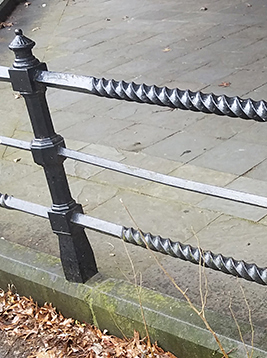
Decorative square twisted bars designed for stair systems, panels, and custom fabrication projects.
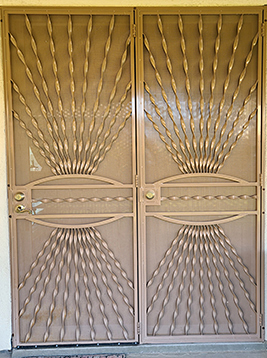
Versatile twisted flat stock built for fabricators, builders, and custom railing applications.
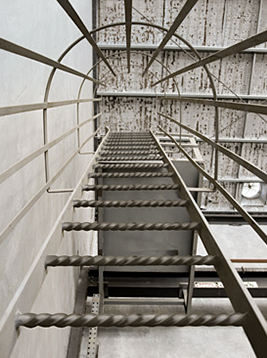
Structural twisted ladder rungs engineered for durability and slip resistant applications.
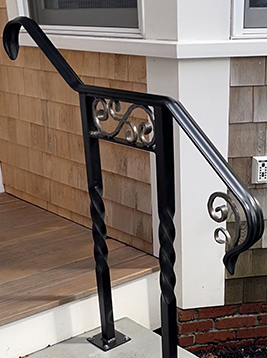
Decorative metal balusters with precision twists for staircases that demand movement and texture.
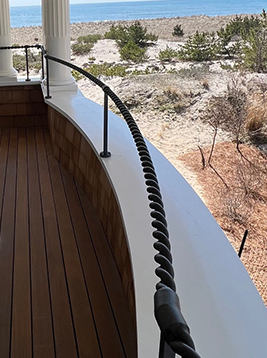
Double-strand rope metalwork designed to enhance traditional and transitional railing styles.

Architectural four-strand rope designs perfect for upscale stair and balcony applications.
Need pricing or product guidance?
Request a quote and our team will help you find exactly what you’re looking for, including custom sizes and configurations.
Twisted Bars as Foundational Components in Architectural Metalwork
Twisted Bars serve as core building elements within architectural and decorative metal systems, providing both structural clarity and visual rhythm across a wide range of applications. Manufactured from solid metal stock, these components introduce controlled surface movement while preserving consistent geometry—making them essential to projects that balance strength with ornamentation.
While often associated with railings and guards, Twisted Bars are used wherever linear components contribute to alignment, spacing, and visual continuity. Gates, grilles, panels, screens, partitions, and custom fabrications all rely on twisted profiles to establish character without sacrificing performance.
The Role of Twisted Bars in Metal Systems
At a functional level, Twisted Metal Bars help maintain alignment and proportional consistency across assemblies. Their geometry allows fabricators to control spacing, attachment points, and transitions while ensuring repeatable results across longer runs or complex layouts.
Because of this role, Twisted Bar Stock is not treated as interchangeable decorative material. Profile selection, twist pattern, and proportion directly influence how well a system performs and how cohesively it reads once installed.
Twisted Bar Stock as Structural and Visual Elements
As linear components, Twisted Bar Stock supports both load distribution and visual order. When proportioned correctly, twisted profiles reinforce surrounding elements by guiding rhythm and spacing rather than competing for attention. This balance allows architectural systems to feel intentional instead of assembled from unrelated parts.
In projects where consistency matters, twisted bars also contribute to visual continuity by maintaining a common surface language across multiple sections of a build.
Design Influence Beyond Function
While fundamentally structural, Decorative Twisted Bars play a meaningful role in shaping architectural identity. Subtle variations in twist depth, bar shape, and profile width allow designers to shift a system’s visual tone—from restrained and linear to expressive and textural.
Some twisted bars are designed to remain understated, supporting the system quietly. Others introduce stronger surface movement, acting as visual anchors that define the character of the overall installation.
Material Consistency and Fabrication Approach
All twisted bar profiles are produced from solid metal stock to maintain straightness and dimensional stability. Aluminum, steel, iron, stainless steel, bronze, and brass are commonly used, each offering distinct performance characteristics and visual qualities while preserving the integrity of the twist.
Rather than dictating a finished appearance, metal construction allows twisted bars to be refined as part of the broader fabrication workflow. Finishes are typically applied later, ensuring surface treatments complement surrounding components without compromising alignment.
Types of Twisted Bars by Profile and Application
Because architectural systems vary widely by layout, scale, and visual intent, different twisted bar profiles are used to address specific roles within a design. Each category below represents a focused application, with detailed guidance available on its respective page. All options are developed to integrate within a unified system rather than function in isolation.
Twisted Square Bars
Twisted square bars feature clean edges combined with surface rotation, reinforcing alignment while introducing controlled visual movement. Their geometry integrates naturally with linear systems where precision and structure are priorities.
Twisted Flat Bars
Twisted flat bars provide a wider face and stronger visual plane, making them well suited for panels, screens, and infill where surface presence and spacing control are important.
Twisted Ladder Rungs
Twisted ladder rungs are engineered for durability and repeatable performance in access systems. Defined by consistent spacing and secure footing, they are used in ladders, access frames, and service structures where strength, grip, and slip resistance is critical. The twisted profile is functional, increasing rigidity and traction while supporting long-term use in demanding environments.
Twisted Balusters
Twisted balusters serve as vertical infill components that manage spacing while preserving openness. Their repeated use establishes rhythm and visual continuity across guards, railings, and partition systems.
2 Strand Rope
2 strand rope profiles introduce paired surface movement that creates refined texture along linear runs. This configuration provides visual depth while maintaining a restrained, continuous profile suited to both traditional and contemporary applications.
4 Strand Rope
4 strand rope profiles feature a fuller twist pattern with increased surface presence. The additional strands create stronger shadow lines and visual weight, making this option well suited for designs that call for a more pronounced rope expression.
System Compatibility and Component Integration
Effective architectural metal systems depend on coordination between components. Twisted Bars are designed to integrate cleanly with Textured Bars, posts, Hammered Bars, frames, Wood Grain Bars, collars, and other decorative elements —ensuring alignment and proportion across the entire assembly.
This system-based approach simplifies integration across multiple applications while maintaining visual balance and structural continuity.
Selecting the Right Twisted Bars for Your Project
Choosing the appropriate twisted bar profile involves balancing functional requirements with design intent. Considerations such as application type, bar shape, surface expression, material selection, and overall system layout all influence the final specification.
By understanding how different Twisted Metal Bars function within a broader system, it becomes easier to select components that support both performance and architectural cohesion.
Built to Integrate Across the Twisted Bars Family
At Twisted Bars, twisted profiles are developed as part of a coordinated family. Whether a project calls for square precision, flat surface presence, vertical infill, or rope-inspired texture, each option is designed to integrate seamlessly within the broader system.
This approach allows architectural metalwork to feel intentional, consistent, and structurally resolved—without limiting design flexibility.