
 419-227-8742
 twistedbars@aol.com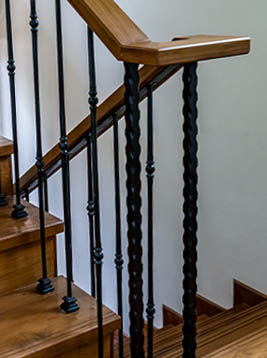
Structural newel posts designed to anchor stair railings with strength and clean lines.
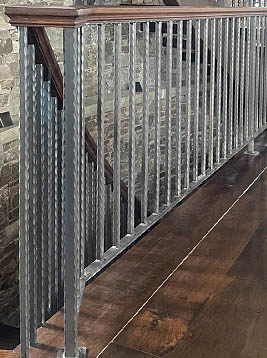
Decorative newel posts inspired by classic ironwork and timeless architectural detail.
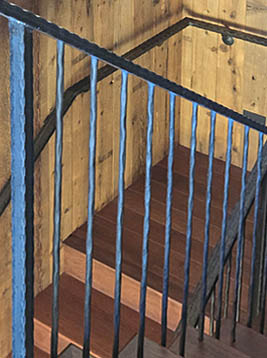
Solid Metal newel posts offering durability, weight, and a classic forged appearance.
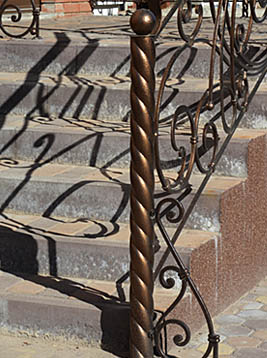
Smooth, round-profile newel posts for traditional and contemporary railing designs.
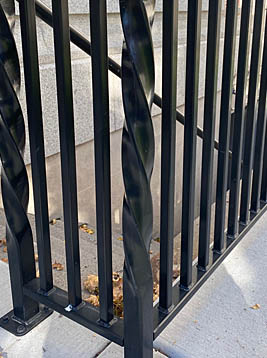
Clean, square newel posts that provide a bold, architectural foundation for railings.
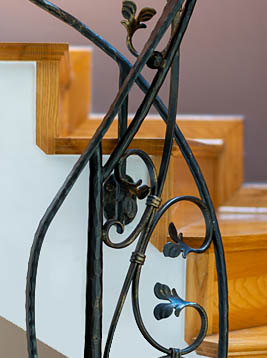
Fully customizable newel posts built to match your exact dimensions and design vision.
Need pricing or product guidance?
Request a quote and our team will help you find exactly what you’re looking for, including custom sizes and configurations.
Newel Posts as the Structural Foundation of a Railing System
Newel Posts serve as the primary anchors within a railing system, providing the structural support required to stabilize handrails while establishing visual order throughout a space. Positioned at key transition points, these components define where a railing begins, ends, or changes direction—making them essential to both performance and appearance.
(You may occasionally see the term spelled as Newell Posts, which is a common variation; both refer to the same architectural component.)
While often associated with staircases, Newel Posts are used wherever a railing or balustrade system requires strong vertical support. Their role extends beyond reinforcement, influencing alignment, proportion, and how the entire system reads as a cohesive structure.
The Role of Newel Posts in Stair and Railing Systems
At a functional level, Newel Posts carry load and maintain alignment at the most demanding points of a railing system. At stair bases and landings, they absorb movement and transfer forces safely into the structure below. Along railings, they provide stability while defining edges and transitions; in select deck applications, they serve a similar anchoring role.
Because of this responsibility, Railing Posts are not interchangeable decorative elements. Their placement, profile, and material selection directly affect how well the system performs over time.
Railing Posts as Structural and Visual Anchors
As core anchors, Railing Posts establish continuity across changes in direction and elevation. When proportioned correctly, Railing Posts help ensure that handrails remain secure and infill elements stay properly aligned. This structural clarity allows the railing to function as a unified system rather than a collection of individual components.
In projects where consistency matters, Railing Posts also contribute to visual balance by defining rhythm and spacing across stairs and railings.
Design Influence Beyond Structural Function
While fundamentally structural, Newel Posts play a significant role in shaping the visual language of a railing system. Proportions, profiles, and surface conditions—such as smooth faces, twisted forms, or hammered textures—help determine whether a space feels refined, traditional, or contemporary.
Some Newel Posts are designed to remain understated, allowing other elements to take precedence. Others are more expressive, acting as focal points that anchor the design and introduce subtle visual rhythm.
Material Consistency and Fabrication Approach
All posts are produced from solid metal stock, providing the dimensional stability required for structural applications. Aluminum, steel, iron, bronze, and brass are commonly used, each offering distinct performance characteristics and visual qualities.
Rather than dictating a single finished appearance, metal construction allows Metal Railing Posts to be refined as part of the broader project workflow. Finishing approaches can be coordinated to complement surrounding materials while preserving alignment and structural integrity.
Types of Newel Posts by Application and Profile
Because railing systems vary widely by layout, style, and structural demand, different types of newel posts are used to address specific roles within the system. Each category below represents a focused application, with detailed guidance available on its respective page. Each option is developed to integrate within a broader system rather than function in isolation.
Stair Newel Posts
Stair newel posts are designed specifically for staircase applications, anchoring the railing at stair bases, intermediate landings, and directional changes. These components absorb the greatest structural forces within a stair system, helping maintain alignment and stability as the railing transitions between levels.
Antique Newel Posts
Antique newel posts draw inspiration from traditional metalwork and historic architectural detailing. Their profiles and surface treatments introduce visual weight and character, making them well suited for projects where heritage styling and classic proportions are important design considerations.
Metal Newel Posts
Metal newel posts emphasize material strength and long-term durability. Fabricated from solid metal stock, they provide consistent structural performance while supporting a wide range of design directions, from understated modern systems to more expressive architectural applications.
Round Newel Posts
Round newel posts are defined by their cylindrical profile, offering a softened visual transition within a railing system. This geometry distributes forces evenly while contributing to a more fluid, continuous design language across stairs and railings.
Square Newel Posts
Square newel posts feature clean, angular geometry that reinforces alignment and architectural order. Their straight-edged profile integrates naturally with linear railing components, making them a common choice for modern and transitional environments where precision and clarity are priorities.
Custom Newel Posts
Custom newel posts address project-specific requirements where standard profiles or dimensions are not sufficient. These components can be tailored to accommodate unique layouts, architectural constraints, or design goals while preserving the structural role of a traditional railing anchor.
System Compatibility and Component Integration
Effective railing systems depend on coordination between components. Newel Posts are designed to work alongside Balusters, coordinated Spindles, and properly spaced Pickets, ensuring alignment, and proportion across stairs and railings.
This system-based approach simplifies integration across multiple sections of a project while maintaining visual balance and structural continuity.
Selecting the Right Newel Posts for Your Project
Choosing the appropriate Newel Posts involves balancing structural requirements with design intent. Factors such as application location, material preference, profile geometry, and overall system layout all influence the final selection.
By understanding how different Metal Railing Posts function within the larger system, it becomes easier to specify components that support both performance and architectural cohesion.
Built to Integrate Across the Newel Posts Family
At Twisted Bars, Newel Posts are developed as part of a coordinated system. Whether a project calls for stair-specific anchors, traditional detailing, material-driven strength, refined profiles, or fully custom solutions, each option is designed to integrate seamlessly within the broader family.
This approach makes it possible to build railing systems that feel intentional, consistent, and structurally sound—without compromising design flexibility.